The Firstborn

Being the youngest child in the family, I don’t know what it feels like to be a firstborn. Having no live children, I also don’t know what it feels like to have a firstborn.

But I do have 2 baby books, and might be able to share my experience of giving birth to the firstborn and watch her grow.

First, I must admit that I sometimes forget my firstborn. Or maybe forget is the wrong word. ‘Give up’ sounds more like it, and it does sound more cruel, doesn’t it?
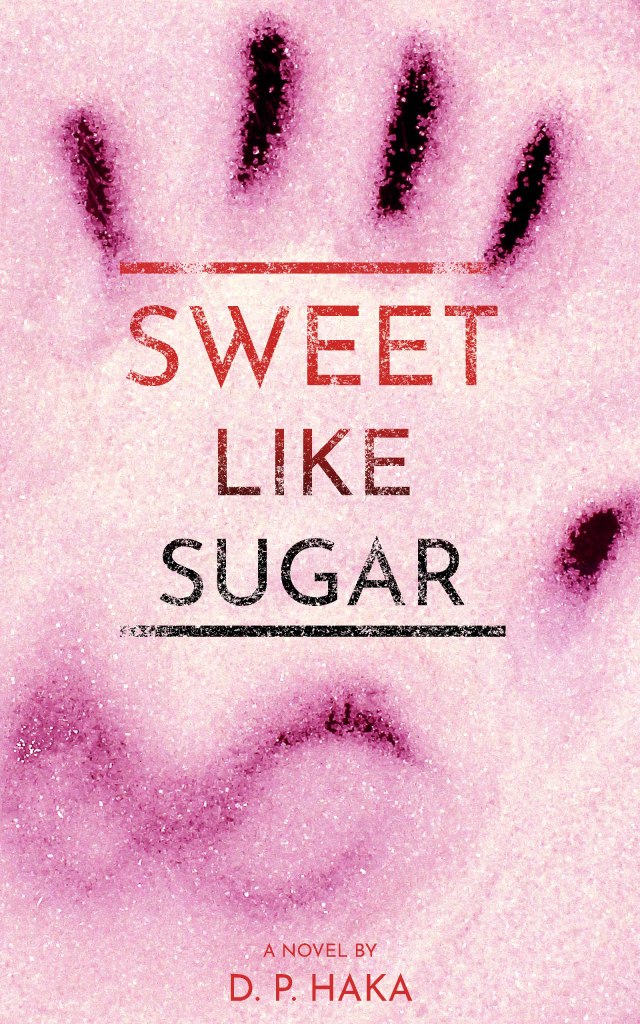
Here’s the thing. I went into labor without any help, as far as marketing went. All I had was my own guts and a naive imagination of what life would be after giving birth to my first book. None of which helped, of course, and the latter didn’t even come close to the reality.

I did not have any beta readers for my first book. All I had was my mother/editor/alpha reader. I’m not saying this is a mistake; some people might be good enough not to need any other help but from an editor/one alpha reader. My problem was (one of many others) that I wrote about something I didn’t know.

The setting for my first book is Louisiana, USA, and I’ve never been to USA, let alone Louisiana. So I should have probably hired a local editor from that state. I didn’t, simply because I didn’t have the money. I was sane enough not to think that I would strike it rich with my first book, so I didn’t want to spend any savings for something I haven’t tested. And yet, in doing so, I probably just made things worse.

Having no beta readers mean that there was no one to tell me if there was something wrong with the story. I trust my mom/editor, but she is just one person. Sometimes we miss things. The advantage of having several beta readers is that one of these people might catch some oddities you/your editor don’t. Again, nobody told me about this before, so I went into the water without any beta readers.

Which also meant that there was no one to give me those ‘crucial’ reviews/testimonials/endorsements when my book just came out.

Imagine this: you see a nice looking book, read the preview at the back & got a bit interested, and try to find out if anyone has read it/if they liked it… and you found none. You read the author’s name again, and realized you’ve never heard of that person before. As you try to look for more info about the author, you found nothing either! What would make you invest your time and money to read a book no one has ever heard of, by an author no one has ever heard of?

Nothing.

And I learned all that only after my firstborn book was out. I thought I was prepared for everything and ready to sell. I waited in anticipation and religiously checked my sales report, while trying my best to market it on my social media platform (which also had no followers as yet). I’m sure you know where this is going. Yep. Downhill.

I won’t lie. I felt that slap in the face, hard. And I noticed I wasn’t the only one. Some people made the same decisions (again, not mistakes) and one by one, I saw them disappearing from the same social media platform, pulling back their books from the circulation at the same time. The authors and their books ceased to exist, just like that.

I thought of doing the same, many times. But I thought I’d stick around just a little more, and resorted to plan B, which in my opinion is also a sad fate for self-published authors: have a free promotion for the book.

Trust me, when you’ve written a book, pour out your heart & soul to it, the last thing you’d want to do is let people read it for free. And they shouldn’t, in the perfect world. You should know your worth, and your book is your artwork, and that is priceless.

But we don’t live in the perfect world, do we? And sometimes, you need to–ugh–beg. By begging, I mean do that f-in free promotion, in the hope that someone, somewhere, will read it and give your book a review (I didn’t even care what review, good or bad was all welcomed!). At least this way you’d know that the review is based solely on your book, not a sugar-coated version you’d get when you pay for a review.

To my surprise (I mean really, it did take me by surprise), the reviews did start to come… and none of them were as bad as I thought.

So I did this begging technique a few more times, especially since a year after my firstborn was out, the lockdown had just started everywhere. I thought that was the perfect timing for people to start reading, and if I could help in any way to ease up their days (with a free psychological thriller book, no less), then why not?

This was when I started to get even more surprised.

By this point, I started to notice how some reader, instead of using the free promotion, decided to purchase my book instead. Was it because I already had a few reviews for it? Was it because of the friends I made in the social media? Was it just because of the book cover (which I also really love)? Whatever it was, it was working.

Finally, my firstborn started to stand on her own feet.

When my second book was born, I decided not to have a free promotion. At least for now, I want to keep my self-worth and put a price to my books. I put everything I learned from not having a successful firstborn to launching my second book baby, and was ready to reap the profits.

At first, that was what it looked like. I got better & quicker sales than I did for my firstborn, reviews poured in quicker too, and all of this was without doing any free promotion. Feeling like I knew how to do it properly this time made me concentrate completely on my second book baby. I neglected my firstborn and, like I said, gave up on promoting it in any way.

But my firstborn is smart. I’m still not quite sure how she does it, but just when I gave up on her, she started running around the world barefeet.

Whenever I put both of my books for a countdown sale, my firstborn somehow convinced people that she was worth the read, too–sometimes even more than my second book. When there isn’t any promotion going on, she manages to make people read her on Kindle Unlimited, or even buy her for the full price.

As a mother, I am pleasantly surprised. To see that some new readers notice the book I had given up on, read it, and even put some reviews for it… there’s no greater feeling than that.

I guess in a way it’s my firstborn’s way of saying, “Look, Ma, no hands!”

And I am a proud Mama. Truly.

Thank you for giving my firstborn a chance, even when her own mother had been neglecting her.

Covering the Covers, Part 2

And I’m back to talk about the behind-the-scenes of making my book covers!

If you haven’t known it already, my second book that was supposed to be suspense and dark drama turned out to be yet another psychological thriller (I promise I didn’t know the genre until after I sent out the manuscript to my beta readers… more on this on my next posts!). So the same rule I used for my first novel–no person/silhouette of a person running/walking away from the reader on the cover–applies here, too.

At first, I was thinking of using a picture taken by my late brother-in-law. He was a talented photographer with an eye for raw and ‘just as you are’ scenes, who mostly took monochromatic pictures of Jakarta and its people, and he usually developed his own films, too.

Since my second book, The Invisible Ones, is set in Jakarta and Bandung, it would’ve otherwise been so perfect.

But as the writing progressed and the title came up (the book title always comes up at the latest stage for me), it was clear to me that I wanted a different approach.

For a moment, I even thought of just putting the title on the cover & that’s it. No images, no pictures, done. Imagine how eye-catching that would be, ha!

But I couldn’t do it. This ‘immaterialized’ book begged for a cover with something else, I had resolved to do it, so do it I shall!

I started doodling again on my trusted notebook. This time, I knew what color palette I was going for (monochrome plus blood red), but putting together a picture would consume too much time and energy… and I’m not even a good photographer.

That means I had to use my other hobby: drawing. I was thinking I could choose several items/events in the book that are significant, and put images of those in the cover. But when my husband saw it, he thought it reminded him too much of Ozark, so I didn’t go through with it.

And then I started thinking of symbols. Things that go on in the book, but put in a way that’s not too obvious. The first thing that came to mind was an onion, because of the way the female main character of my book tells her story. We’re peeling layer upon layer of her story until we get to the very core of herself as we move on throughout the book.

But as I thought of the layout of the book cover, imagined it with an onion at the center, it made me think of a recipe book instead. And that wasn’t a good idea. How could I make it work? I figured I needed to look around for ideas. How do other book cover designers/illustrators illustrate book covers in a not too-obvious way? How do they decide what to show on the cover?

While I went through other authors’ gorgeous book covers to search for ideas, I suddenly got reminded of my other past-life obsession: tarot cards.

Ever since I was a teenager & got my first tarot card deck, I had always dreamed of making my own deck. I was intrigued by the many hidden symbols in one single card, when I finally got the meaning of one thing it was like decoding a secret world.

It suddenly clicked in my head that that was what I was gonna go for. Make my book cover look like a tarot card, with all kinds of symbols for everything that goes on in the book. When the readers decode it (and I hope they do), I imagine giving them the same satisfaction as I got from decoding tarot cards.

Since the story takes place in Indonesia, I wanted to make all the symbols and style distinctly Indonesian, or even more specifically, Javanese. What would be better than Javanese batik and wood carving style?

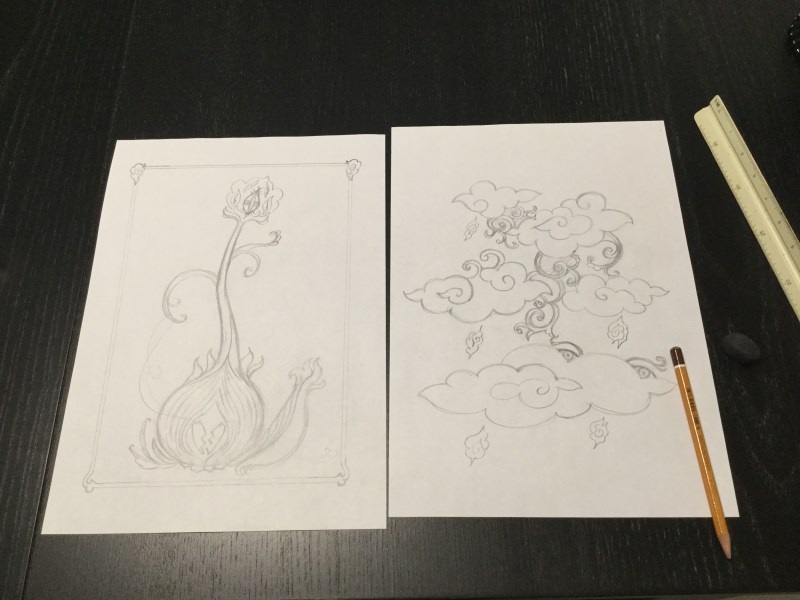
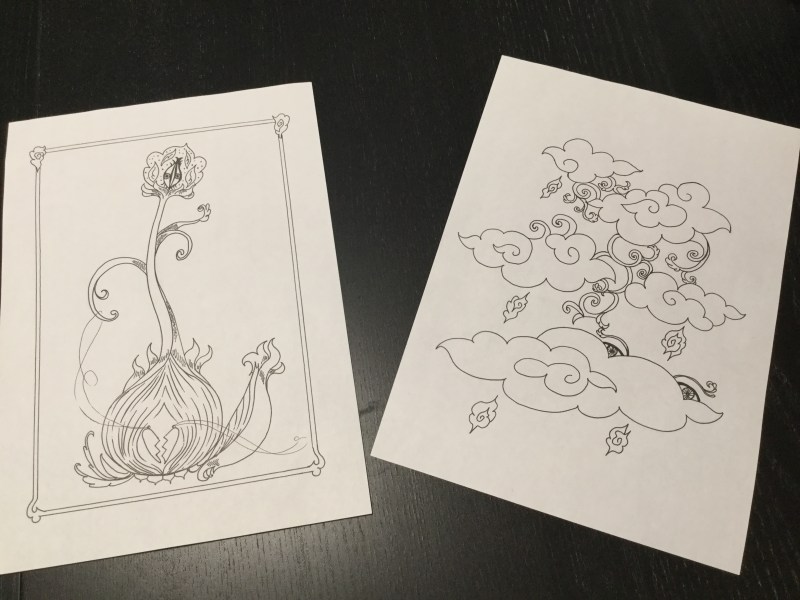
The ‘two of everything’ continues all the way to the cover. Each main character deserves their own illustration, so I made 2 separate ones to be combined in the end.

The bulb and flower for Maya, the clouds and rain for Indra, my other main character.

The clouds are drawn in the style of Indonesian batik pattern called ‘Megamendung’. I can’t even begin to tell you how these clouds depict Indra so well (other than the fact that his name means ‘god of lightning & rain’), so you can google the meaning of the pattern if you’d like.

Maya’s is the onion, as per my original idea, drawn also in the same style of Javanese batik.

I used licensed Photoshop for commercial use again to edit the illustrations.

This time, I wanted the font not to only tell readers/viewers what the title of my book is, but to also show it. I chose a font that has multiple thickness to create a sense of invisibility to the ‘invisible’ word.

In general, I like my book covers to have matte finishing. However, having a black book cover was something I never tried in matte finishing, and I was slightly worried about how it would look. This was where the author’s proof copy came in handy.

If you’re self-publishing a paperback, I highly recommend getting the author’s proof copy before you actually publish it. For me, it was great to see if all the tiny white outlines of my illustration were visible enough and to know just how dark black the book cover would look like in real life.

Once everything was done, it was time to publish the book!

Just like with my first book, I love my second book cover. It’s me, it’s perfect for my story, and it’s something I won’t be embarrassed about no matter how long I see into the future.

If you’ve read my book, how many symbols have you found in the illustration that you could make out from the book? Remember, everything means something there in the book and on the cover design. Nothing means nothing.

It’s Time

The time has come for Maya and Indra to welcome you to Indonesia. 🧍🏾‍♀️🧍🏻

The Invisible Ones is going to come out on July 15th! 🥳🤩🙈👀

My proof print came yesterday and I couldn’t contain myself. Though this is my second book, seeing my words coming into the shape of a real book is just priceless. There are still some minor things to tweak, which is why a proof print is always good to have. Yet I am confident that I will be able to get the book out by 15th. 😊👌

I’d like to share the lovely endorsements I got from my beta readers, printed on the back cover of the book. These are their honest opinions and I am so incredibly happy to know that they liked my book. When you’ve spent so much time to write a story and lived in it for so long, it’s sometimes hard to believe that other people would actually read and understand your work, let alone like it. Having these words printed on my book will certainly remind me of this achievement, no matter how small it may seem to others. To me, it means the whole world. Thank you ever so much, dear beta readers! 😘💕

There will also be something fun starting tomorrow, just to while away the days until the actual launch of my book. Stay tuned!

Selamat jalan ke Indonesia! 🛫Semoga selamat sampai tujuan. 😉

📸: Victor Lumunon.

PS. Visit my Instagram for more exciting news, updates, and an ongoing giveaway contest (from 12th to 14th of July).

Covering the Covers, Part 1

Let’s talk about making book covers.

The good thing about being an independent (indie) and a self-publishing (self-pub) writer is that you get to prepare your own book covers. The bad thing about being an indie and self-pub writer is that you get to prepare your own book covers.

You either love doing it, or you don’t. Luckily, there are many book cover designers that you can hire to do your book cover these days, but as I haven’t used any, I’m here to talk about the other option: making it yourself.

I am merely writing this down to record my own experience and journey, and in no way I am saying that this is what one should or shouldn’t do. If you are a fellow indie/self-pub writer, at the end of the day you’ll realize that you’ll find your own voice and ways to do things.

Though the appeal of using ready-stock images and easy-to-use image editing apps may be calling, for my previous book and the coming one I used the old-fashioned ways. I took the pictures myself or I drew things by hand and used a ‘licensed for commercial use’ program to make them. One might argue that such licensed programs are expensive and since we don’t even know yet if one would make profits from the book itself, why pay that much? Well, I can tell you one thing: some things are worth investing in. If something can put an ease to my mind for not having anyone claim that I stole their photo/illustration some time in the future, then by all means, sign me up!

To be honest, the main reason why I do this the old-fashioned way is because I do judge a book by its cover. In my humble opinion, when one uses ready-stock images or easy-to-use image editing apps, there’s always a risk that the book cover in question would end up looking similar to others’. If I only have one shot to catch a possible reader’s attention, I’d want my book cover to be different than others.

So the first thing I did when designing my very first book cover was to decide what I didn’t want. Psychological thriller/mystery books often have a person on the cover, with his/her back facing the viewer, usually either a person that looks like a detective or the ‘victim’ running away to the dark. Have you ever noticed this? I have. And speaking of dark, dark colors are used immensely as well. Early on in the days of my designing my book cover, I knew that I didn’t want any of these.

By this time, I already knew the title of my book (FYI, it’s not strange for me to not have a title until the very last moment) so for my first book, that was what I looked at next, and took quite a literal translation to it.

early sketch for the cover

Of course it was only natural that I had to have sugar on the cover of my first book, Sweet Like Sugar. Sugar was, after all, the coating of everything in that story. But underneath the sugar lies something dark, so I had it photographed on top of a black plate, with just a tiny bit of black lurking from beneath it.

just white sugar on a black plate

As seen from my sketches, I didn’t plan on having a hand print on the cover. But as I was trying to get the right kind of surface, playing with all the sugar with my bare hands, the idea started to form in my head.

hmm, kind of cool

After taking dozens of the same shots, I decided to develop both ideas and see which one came out better.

I don’t know about you, but I liked the hand print better! And yet, something is still not quite right. It wasn’t until I played with the saturation that it dawned on me: the color had to be something else than white.

You know that feeling of craving for something sweet, and then you finally get to eat a whole lot of that sweetness until you get so sick from it? Sickeningly sweet. That was what I wanted it to be. That was what I wanted the book cover to ‘taste’ like.

voila!

And that was how I got to this end result.

To others, it probably doesn’t seem like it was a lot of work, but I did spend a considerable amount of my time for it. Maybe I was just too slow, but I am still damn proud of my first book cover. It has the right amount of eye-catchiness, the right amount of sweetness, and the right amount of unsettling darkness.

The Next Book

Months ago, I wrote about winning a writing competition for a short story with the genre ‘crime’ or ‘possible crime’. This same winning piece is now fully developed into a longer story, bearing an altogether different title. As you can now see from my newly designed website, the title of my next book is The Invisible Ones, whereas the winning short story was called Best Friends.

A few things about my coming book:

It’s all about the rule of 2 for my next book: 2 main characters, 2 cities.

The 2 main characters are Indonesians, and the 2 cities, Jakarta & Bandung, are in Indonesia. I didn’t ‘choose’ this location because I’m from there, but because for this story to be believable, it has to happen there. Things that may not make sense anywhere else in the world, they do there. And I’m hoping that by the time you finish reading the story, you will see why & won’t be left with questions.

The story, much like my first book, spans out a bit over 3 decades. The earliest year recollected here is 1986 & the present time is 2018. It’s a long process. One part of the book takes you back & forth between all those years, the other part goes in a linear way.

Everything that happens in the book happens for a reason. Nothing means nothing.

There’s also 2 trigger warnings: mental illness & domestic violence. I’m sorry to say that this book is not a light one to stomach. Instead, I’ll admit, it is an ugly one that paints an ugly picture.

But it’ll all end well, right? Well, see, I can’t give you any spoiler. All I can say is that this is not a ‘feel-good’ kind of book, more of a ‘wake-up call’ kind, for us to start becoming aware of things that go on around us, even if they happen in a far away place. I’m still trying to figure out myself what the genre of the book is, but it has crime, suspense, and darkness written all over it.

Playing God

The best thing about being a writer, in my opinion, is that you get to play god.

You decide what happens to your character, who dies, who lives, who’s happy, and who’s sad. You decide what your character says, does, wears, eats, drinks, and so on.

Things you may not be able to do in your own life, you can do in your book, through your character.

For example, in real life, I can’t have a dog. I do take care of some of our relatives’/friends’ dogs now and then, but due to my work, I can’t have my own dog. Not yet. And it’s sad, because I’d love to have one.

So I dreamed up a dog and put it into my novel.

I love it. I love the imaginary dog. Through my character(s), I play with it, feed it, and walk it around. It was hard when I had to end my story, because every book has to have an ending. But who knows? I might one day be able to have an actual dog, just like the imaginary one I made.

If you’ve always dreamed of having something nice that you can’t quite have yet, it helps to write it down sometimes. You can be creative about it, visualize it to be as realistic or far-fetched as possible. It’s a fun and harmless way of playing god. At least for me, it also somewhat relieves the itch and craving.

Then, one day, when you finally get to have that nice thing, whatever it is, imagine how fun it would be to read what you’ve written those many years ago.

The Cover

Guess what? The D-day is in 12 days!

Time for ‘last-minute’ checks and preparations for me, but I want to give a small update here in my blog.

As mentioned on previous posts, the book will be available in paperback and e-book version. Once they are launched, I will post the links here. And now I can safely say that they will be published on the same day.

So when will that be, exactly? June 27th, 2019.

And just to make sure you won’t buy the wrong book, here’s what the cover of my book looks like.


To Have And To Hold

When I was still writing the book, the thought of holding it in its physical form seemed far-fetched.

But now the proof print of my book is right here in front of me, proving it further that nothing is really far-fetched if you put your mind to it.

17 days from now, the book will finally be ready for the world.

It will be ready for all of you, to have and to hold.

PS. If you prefer to read it from your phone or tablet, the digital version of the book will also be available starting from the same day.